
For evidence to have a real impact, it needs to speak to the interests and motivations of the intended audience. But how do you identify who your audience is and how you want to influence them?
The Problem with Research
It is hard to understate the importance of the scientific method. In the political climate we are in right now, it seems almost reckless to criticize it. Yet, the research process has some work to do. Academic research is often focused on developing theories to advance knowledge within a specific discipline. This can lead to research that has little impact or use outside of academia. This can be true even in non-academic settings. For example, the World Bank revealed in 2014 that a third of its policy reports were never read [1]. When applied in real-world settings, research needs to put more focus on practical application. How can we refocus the research process to have more impact?
Finding your Primary Audience
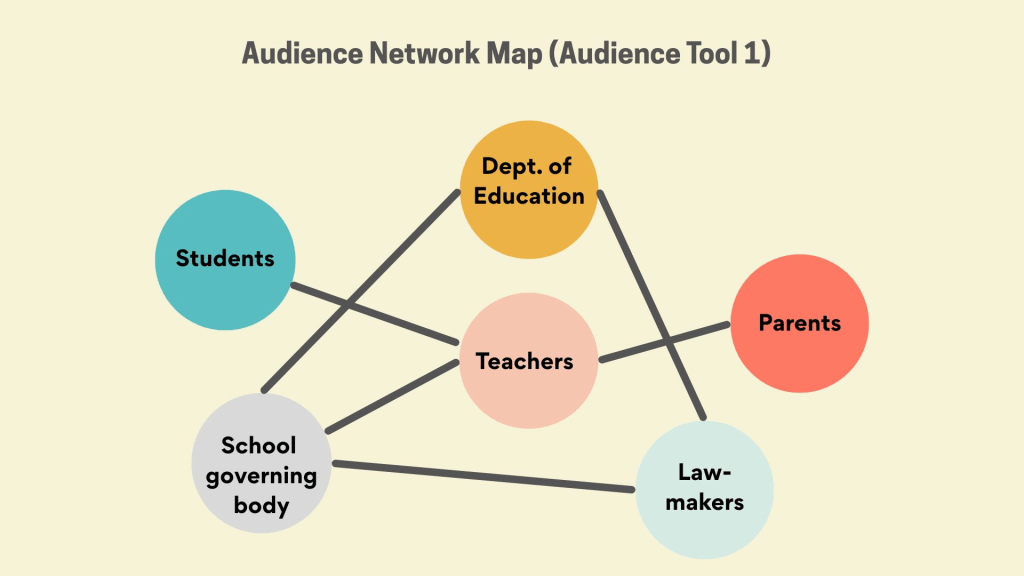
Researchers often go through the entire research process before thinking about their intended audience and how they want them to use the findings. To make research more practical, we need to think about the audience first. A helpful place to start is to create an audience network map (Tool 1). For example, suppose you are conducting research to understand what the best method is for teaching children how to read. Your audience map would then include all the people involved in making or using reading curricula. It would also show how they interact with each other.
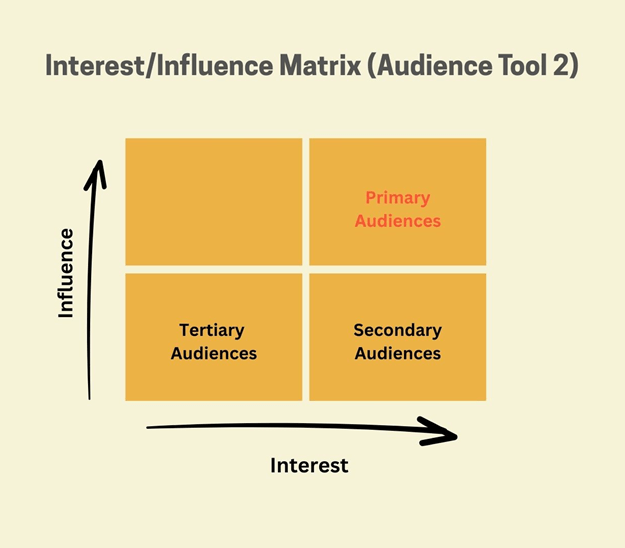
Since the audience network map produces many potential audiences, your next task is to narrow the list down using the interest/influence matrix (Tool 2). Your primary audience consists of individuals who have the most interest in your research and whom the findings have the most potential to influence. In the reading curriculum research example, you might focus on teachers of school-aged kids as your main audience. They are both very interested in teaching methods and are able to apply the research findings to enhance child literacy.
Mapping Enablers and Barriers
The next step is to determine what you want your primary audience to do with the research findings. Using the same example, you may want primary school teachers in your district to use the research findings to adopt the most effective child literacy curriculum. You would then want to create an enabler and barrier map (Tool 3). This will help you think about what would enable teachers to adopt a new curriculum and what the potential barriers may be. Understanding the enablers and barriers will help you identify key research questions. It will also help identify topics to explore in the discussion or recommendations section of your paper. Ultimately, this will lead your research to engage the audience that has the greatest potential to use the findings to have an impact.

Key Takeaway
To increase the impact of your research, you need to understand who your audience is and how you want to influence them. Addressing audience-specific enablers and barriers in research will increase the likelihood that your audience will find it relevant and use it.
Citations
[1] Slate (2014). Literally a Third of World Bank Policy Reports Have Never, Ever Been Read Online, By Anyone. https://slate.com/news-and-politics/2014/05/world-bank-reports-unread-policy-recommendations-go-undiscovered.html

 The Evidence Reaction
Leave a reply to The Power of Data Storytelling – The Evidence Reaction Cancel reply