
Storytelling is a fundamental part of what it means to be human. As long as humans have been around, we have been telling stories. The information humans generate now is more complex than ever before, but it often lacks the emotional pull of a good story. How can we harness the power of storytelling to make data come to life?
Data Storytelling
Data storytelling provides a compelling narrative for complex data to move your audience to take a specific action. Storytelling is a powerful form of communication. It reaches parts of your brain that manage language, emotions, and emphathy.1 It also has the power to influence behavior and attitudes2. Instead of just presenting statistics, use the following steps to craft your data story.
Step 1 | Find Your Main Characters
The main characters are the people behind the statistics who will bring your data story to life. Most stories have a main character (i.e., protagonist) who propels the story forward by making decisions and facing obstacles. The antagonist is a person or situation that creates conflict or tension in the story by opposing the protagonist and their goals.
Start by interviewing people in the community you want to tell your data story about. Identify one person to center your story around. Capture their traits, goals, and desires. Explore what shapes their social identity. Highlight the cultural aspects that are important to them and their community.
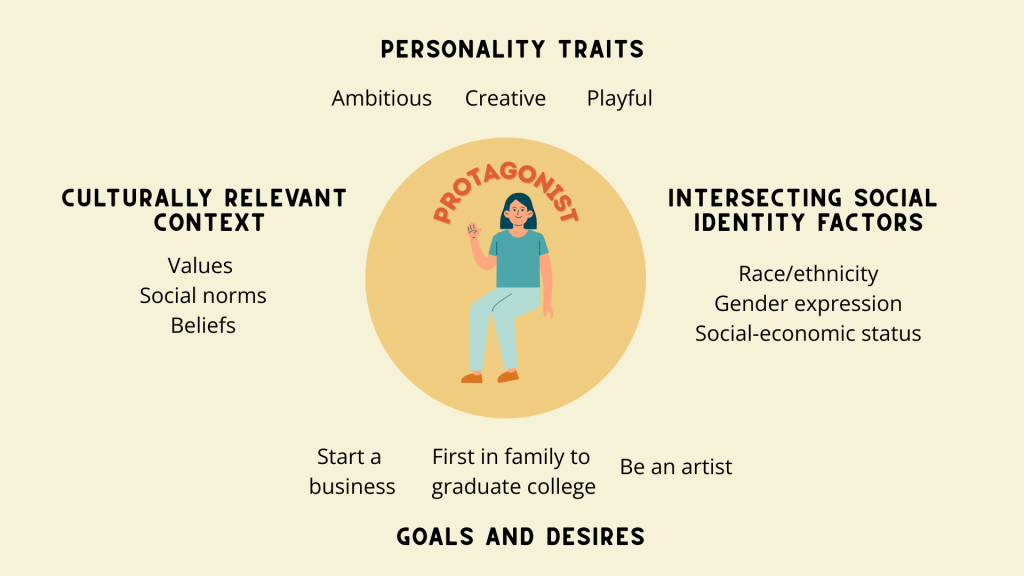
In a data story, the antagonist is often an event or situation rather than a person. Examples include losing a job, facing a natural disaster, or experiencing eviction. These conflicts shape the main character’s journey. Gathering life histories from your main character can help you identify the antagonist event. Life histories focus on capturing turning points or important events in people’s lives over a certain period or timeline.
Step 2 | Develop Your Story Blueprint
You are now ready to build the outline of your story. A story blueprint is a roadmap that will help you lay out your story’s structure to ensure it makes sense and makes an impact on your audience. The classic Western-influenced story arc tends to be linear and includes five parts:
- Exposition | This is where you set the scene for your story and your main character.
- Rising action | This is where the protagonist pursues their main goal and begins to face obstacles.
- Climax | This is the peak of the story’s action, where everything comes to a head.
- Falling action | In this part, the conflict resolves, and the protagonist moves toward resolution.
- Resolution | The story’s conclusion reveals something about the theme and the moral of the story.
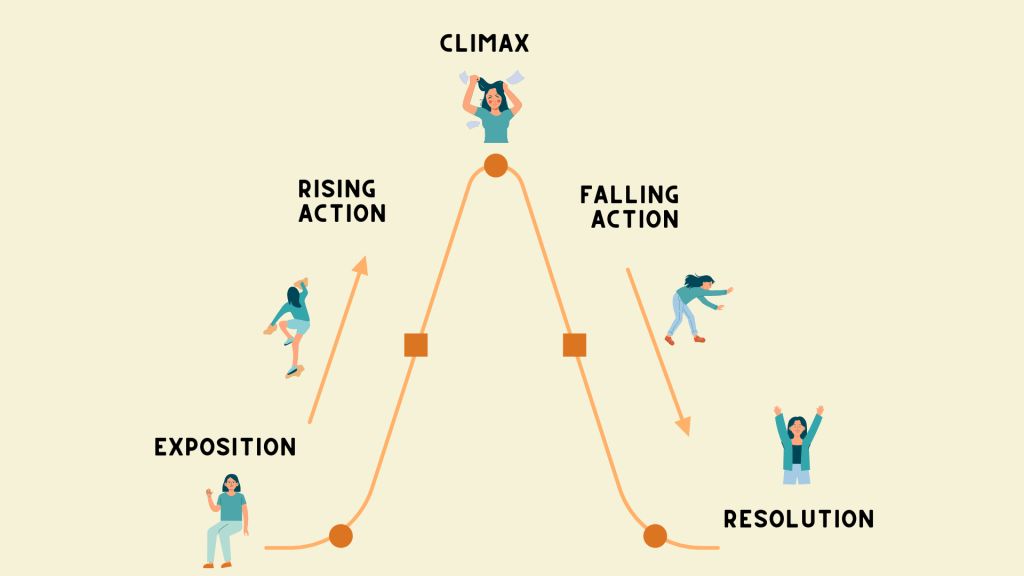
Depending on your audience, you can incorporate more non-linear story structures. These are more common in non-Western thinking cultures. For example, American Indian and Alaska Native storytelling structures may begin in the middle or end, then move to the beginning3. Somali storytelling traditions often feature poetry and proverbs as key elements.4
Step 3 | Craft your Story
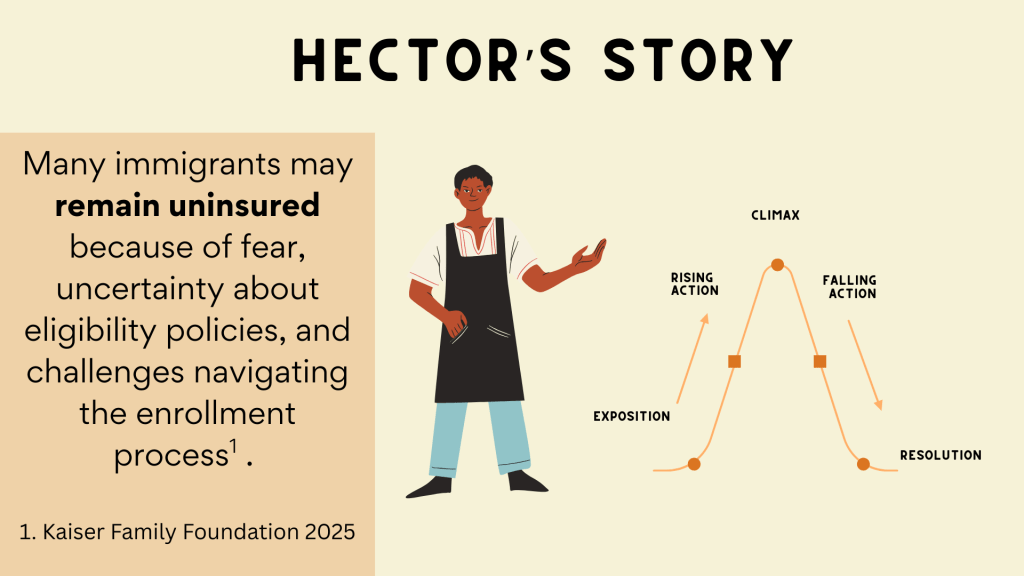
Now it is time to combine your data, story narrative and compelling visuals into your data story. Use this 3-step outline to craft your data story.
- Tell them why they should care: Present compelling findings related to the issue that use easily digestible visuals.
- Provide an emotional hook: Share an engaging story that gives a personal connection to the issue.
- End with the solution/concrete ask: End on a call to action that is tailored to your audience.
Here is an example:


Key Takeaway
Data storytelling is a powerful tool for communicating information and moving people to take action. Data stories bring data to life. They blend statistics with personal narratives and striking visuals. They often include main characters (protagonist and antagonist) and a story arc or blueprint.
Citations
- Cote, C. (2021). Data Storytelling: How to Effectively Tell a Story with Data. Harvard Business Insights. Access at: https://online.hbs.edu/blog/post/data-storytelling ↩︎
- Renken, E. How Stories Connect And Persuade Us: Unleashing The Brain Power Of Narrative. NPR. Access at: https://www.npr.org/sections/health-shots/2020/04/11/815573198/how-stories-connect-and-persuade-us-unleashing-the-brain-power-of-narrative ↩︎
- Jones, D.S. (2021). How American Indian Storytelling Differs From the Western Narrative Structure. School Library Journal. Access at: https://www.slj.com/story/american-indian-storytelling ↩︎
- Said, H. (2025). The role of proverbs in Somali storytelling and daily life. Meer. Access at: https://www.meer.com/en/89885-the-role-of-proverbs-in-somali-storytelling-and-daily-life ↩︎

 The Evidence Reaction
Leave a comment