
How should we use data to make decisions? In our data obsessed culture, people rarely stop to ask this question. Data is often viewed as objective and neutral. Yet, artificial intelligence shows us data is incredibly biased. Applicant tracking systems favor male applicants. Computer-aided diagnosis systems underdiagnos black patients. How can we reduce bias in data so that it can be used for good?
What is good evidence?
Let’s first think about how data is used to make decisions. Data becomes evidence when it is interpreted to answer a question. The answer to that quetion is then used to inform a decision. Evidence is typically ranked based on it’s quality and rigor. The scientific method tells us that evidence is good when it more objective and bad when it relies on the subjective opinions. This informs the evidence hierarchy, which puts randomized controlled trials at the top and expert opionion on the bottom.
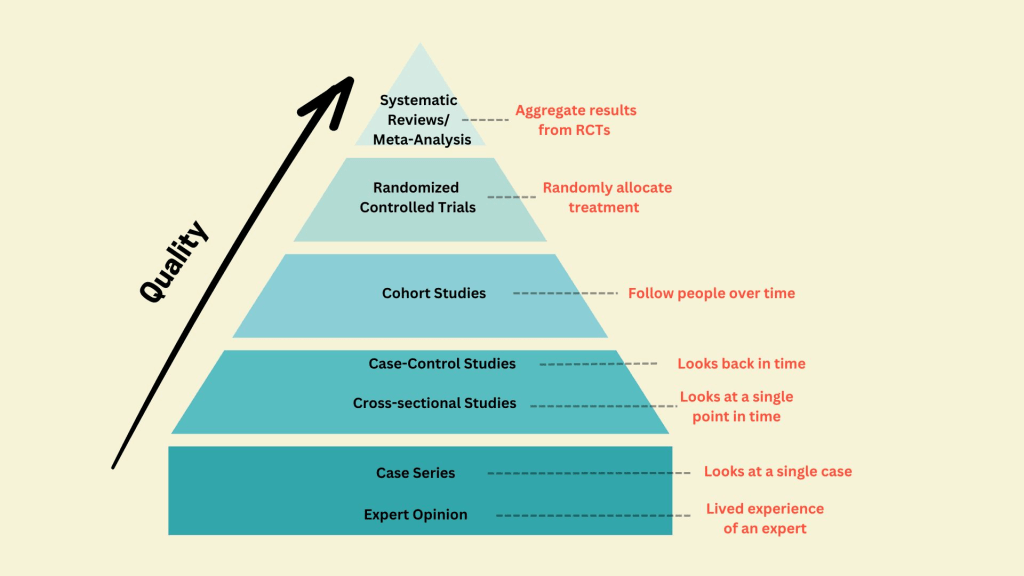
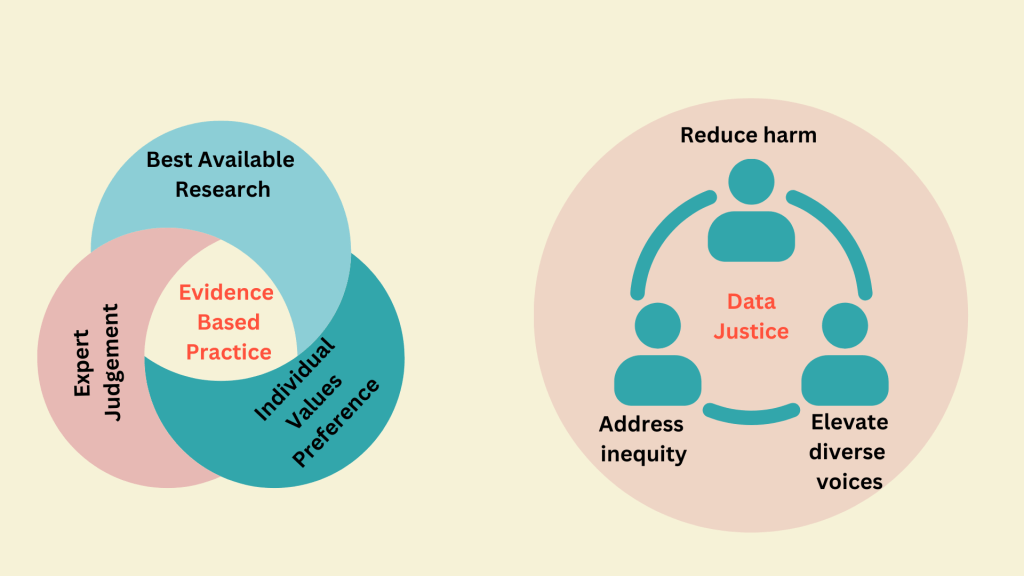
Many see this hierarchy as too rigid and not able capture the complexity of how decisions are made in the real-world. This has led to a movement towards evidence-based practice. This approach combines the “best” available evidence, expert opinion and the preference of those affected by a decision (such as patients) to inform a decision. A recent scoping review found that using evidence-based practices improved the tripple aim of heathcare – improving patient outcomes and experience while reducing cost [1].
Centering Equity in Evidence
Using an evidence-based practice framework leads to a more balanced decision-making process. But does it go far enough to reduce the inequities that are driving poor outcomes in the first place?
To address inequity, many organizations have adopted a data justice framework. Data justice centers communities as the primary partners and drivers in determining what data is collected and why. It brings a social justice lens by addressing power dynamics in the collection and use of data. Data justice practices reduce harm by avoiding unnecessary data collection and by considering how questions might retraumatize various groups. Data justice practices also aim to elevate a diverse voices and perspectives in the interpretation and reporting of data.
Key Takeaway
Evidence-based decisions should balance the desire for scientific rigor with the values and preferences of the people who will be affected by the decision. Putting data justice into practice requires shifting power and reassessing how we value certain types of evidence.
Citations
[1] Conner, L., Dean, J., Mcnett, M., Tydings, D.M., et. al. Evidence-based practice improves patient outcomes and healthcare system return on investment: findings from a scoping review. Worldviews on Evidence-Based Nursing. Volume 1, Issue 20: page 6 – 15.

 The Evidence Reaction
Leave a comment